

AI lease review for law firms
BAiSICS · document analysis for law firms and property consultants
OpenKit designed and built the BAiSICS platform, where a commercial lease now takes ten minutes to review against the two hours it took a skilled professional by hand. Every answer links back to the paragraph it came from, so the reviewer can check it.
Overview
BAiSICS sells document analysis to law firms and property consultants. The commercial leases they review follow no standard form and many arrive as poor scans, with the terms that matter amended by hand in the margin. Keyword search cannot cope with scans like that. A chat model that returns a confident paragraph with nothing to back it up is worse than no tool for a partner who has to stand behind the answer in front of a client.
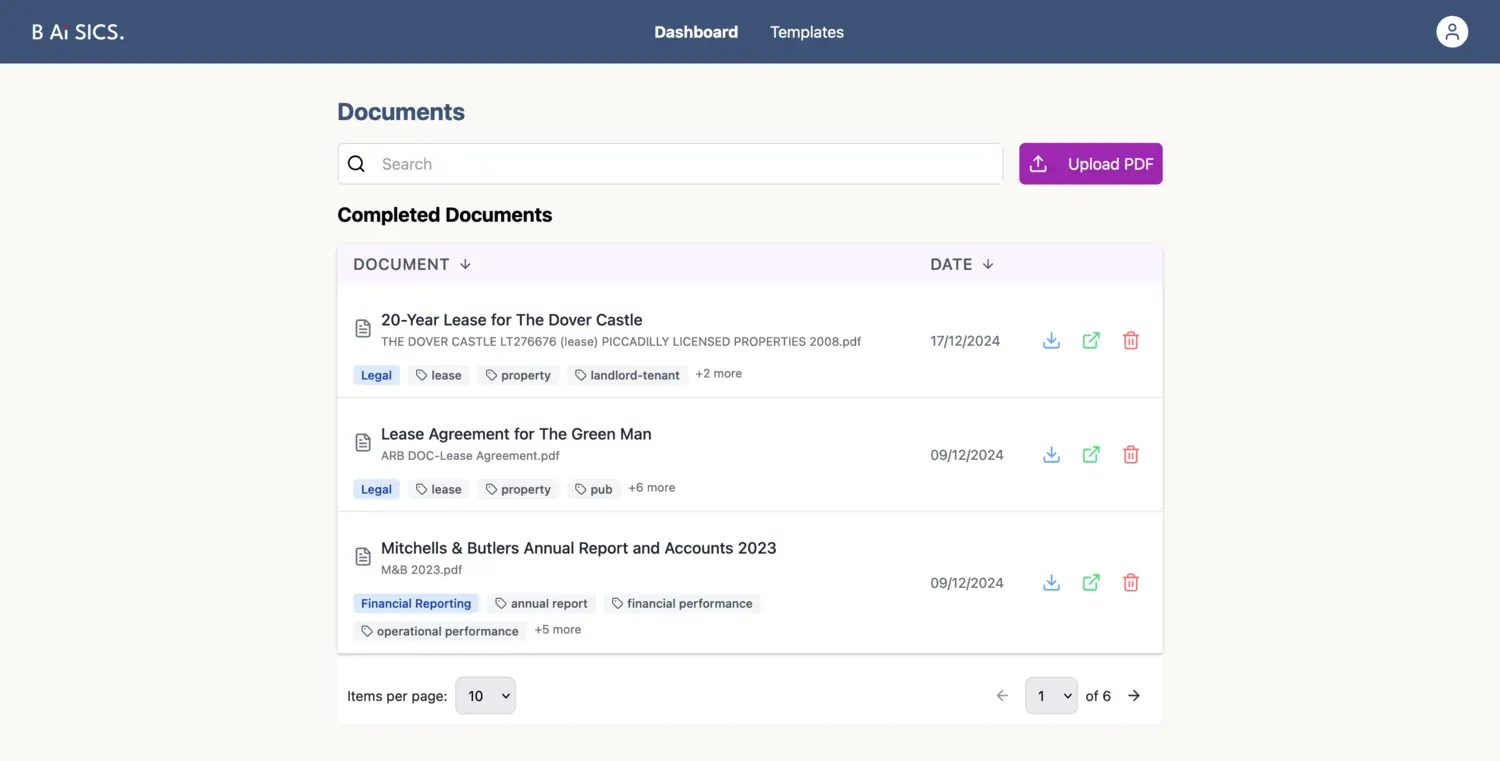
OpenKit built the whole product: the brand and interface design, the marketing site, the subscriber platform and the AI underneath it.
10 min
to review a commercial lease end to end, against the two hours the same document took a skilled professional by hand.
£200K+
saved a year, as reported by the firms that run their commercial lease work through the platform.
96%
of extracted fields matched the partner’s read, tested on historical leases that senior partners had already marked up.
100
documents in a single batch, processed in parallel. One bad file fails on its own and the rest of the run finishes.
Approach
What OpenKit built
- An OCR pass tuned for skewed, poorly scanned leases with handwritten amendments.
- A citation on every extracted field, highlighted at its place in the lease.
- Templates each firm owns and sets up without code.
- An API so third parties can put the analysis behind their own product.
The platform flags any field it is unsure of for a person to check. It runs across several model providers, so BAiSICS does not depend on any one vendor staying available. Data stays in the UK, under UK GDPR.
Checking an answer against the lease
The lease sits open beside the answers and a reviewer confirms a clause in two clicks.

Setting up a run
A template loads its questions and the team can change the wording and the context note behind each one before anything is processed. The cost of the run shows against the account’s credits, so the team knows what a 200-page bundle will cost before putting it through.

Building a template
A legal team picks its own fields and decides which are required, then runs the template across any matching document type.

The template library
Each firm’s templates sit beside a standard set for common document types and are shared across the team, so a template written for one matter becomes the starting point for the next. Firms run them across hundreds of documents without rebuilding the field set each time.

Result
What changed for the firms using it
Firms now put their commercial lease work through BAiSICS by default. The platform started with legal documents and now runs in other document-heavy sectors, with each round of work scoped by how firms were using it.
Voice
In their own words
Having completed our second major AI agent development project with OpenKit, I can confidently say they're the real deal. Our system analyses large, complex and poor quality documents with remarkable accuracy, surpassing solutions like GPT and other AI legal tools. The transparency is fantastic; you can instantly verify every AI output against source documents, which builds trust with our users.
Other engagements
What could your business do with AI?
Find out with experts who become part of your team. We uncover opportunities, get ideas working, and help your people build on the results. We reply within one working day.
Get in touch AI Engineering