
AI for manufacturing and mobility
On the factory floor or across a fleet, AI drafts the documentation and the tender answers, and your engineers sign them.
What AI can do with the paperwork a job needs
AI drafts and checks the paperwork a job cannot ship without: operation and maintenance manuals built from your own specs, findings pulled out of scanned inspection records, the compliance matrix behind a tender, and the month’s sensor exports written up as a report. Those sensors sit on a production line or in a vehicle out on the road.
How we engage with manufacturers
Most engagements start with the AI Audit, with scope and fee agreed before the work starts. Some manufacturers then continue with an Embedded AI Lead engagement to implement the roadmap, while others commission a bespoke build.
- AI Audit We measure where the specialist week goes and hand back:
- Executive summary
- Interview and findings report
- Implementation roadmap
- Costing and benefit assessment
- Embedded AI Lead We implement the priorities you agree inside a defined delivery allocation, building the plan into the day’s work and training whoever signs the reports. from £5,000 a month
- AI Charter It writes down what AI is used for here and who owns each workflow an auditor might ask about. optional, +£3,000
Implementing the plan is a separate decision. What goes live is measured against the specialist hours the audit counted.
Checked against the client’s own numbers
For FW Thorpe’s Thorlux division, a UK-listed lighting group, OpenKit validated around 6.5 million SmartScan occupancy records against the live dashboard. The three-week discovery ended in a specified reporting build, with UK-region processing written into the recommendation. For an international oil and gas service provider the recommendation went fully on premises, because pipeline integrity data could not leave its estate, and we specified the pilot in two stages with a go or no-go gate between them.
Where firms like yours start
It drafts the operation and maintenance manuals from your own specs, with every claim traced to its source.
It runs the first pass across scanned inspection records and cites the cell or line behind each finding.
It assembles a first draft of the tender answers from past submissions and builds the compliance matrix beside it.
It writes up the month’s sensor exports as a report, with the arithmetic done in code.
The manuals and the bids arrive already started, and every figure traces back to the document it came from. The last job’s paperwork feeds the next one.
The audit works out yours.
Related work
A UK-listed lighting manufacturer whose sensor data we validated before any reporting was specified, and a cross-platform industrial IoT system built for equipment that has to keep reporting when the network drops.
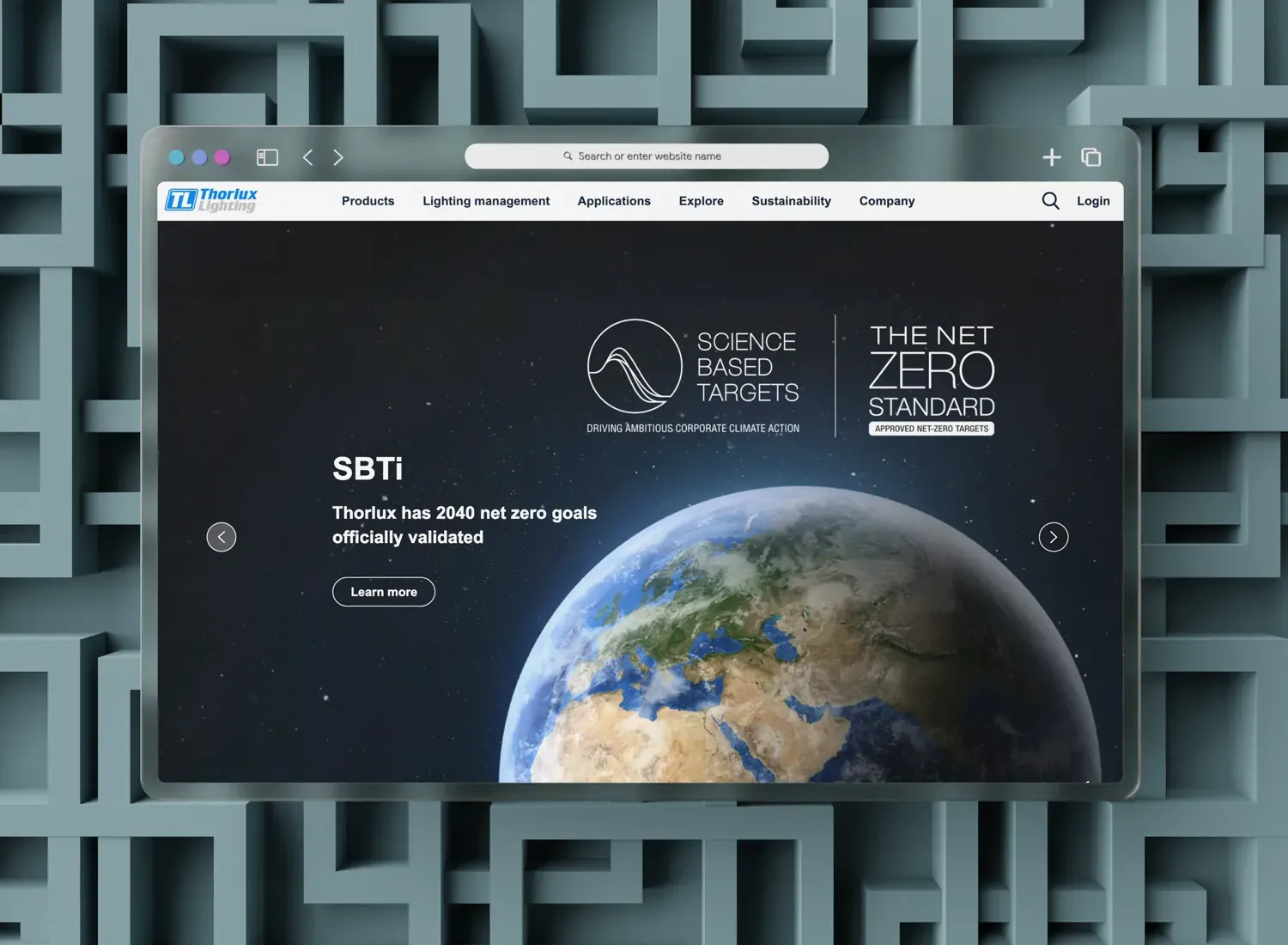 FW Thorpe (Thorlux) Proving the data before specifying the report Occupancy records validated against the live dashboard, with board-ready reporting specified off the same SmartScan feed. ~6.5M Occupancy records validated
 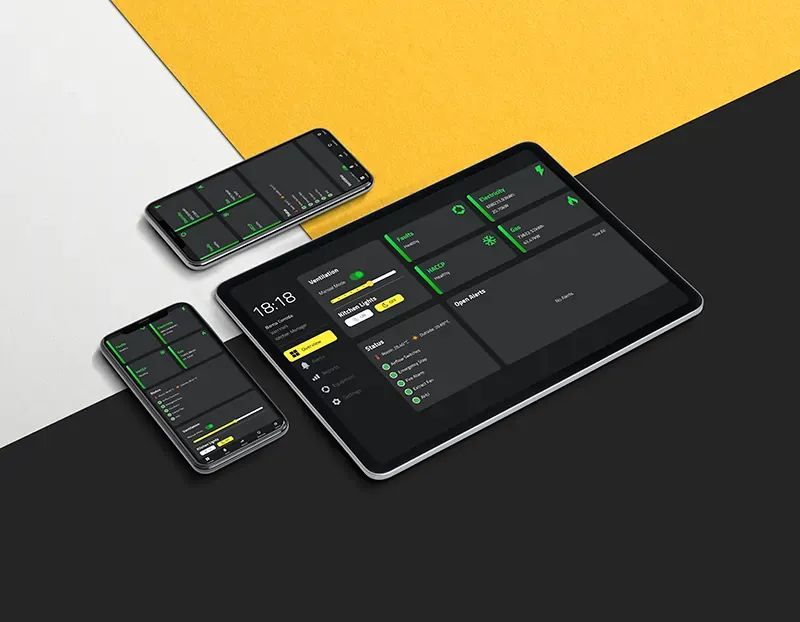 Kioti Monitoring equipment through a dropped connection Ingestion sized for over a thousand data points an hour, with operator tablets that keep working when the network goes and reconcile when it comes back. 1,000+ Data points per hour
 “We worked with OpenKit, as we wanted a company with domain expertise in LLMs to look at our strategy and test the concept. The study was focussed and really gave us a validation of our concept, a technical roadmap and prioritisation of the developments. The OpenKit team engaged well during the project, and through capture of workflows and interviews gained a good understanding of what we do. OpenKit provided a good technical study and exceptional value for money.”
Built to hold up under a procurement audit
We hold the certifications procurement asks for, and where residency rules a cloud model out we deploy inside your own boundary. Private AI

ISO 27001, ISO 9001 and Cyber Essentials are certifications we hold, and we operate to UK GDPR. Solutions are designed to help meet the EU AI Act where it applies, so your compliance team can verify the work.
The questions that decide it
The things engineering and procurement want settled first: scope, HSE duties, where the data sits, what it integrates with, and what it costs.
What does an AI consultancy for UK manufacturing actually do?
We audit where AI fits across the floor and the back office and where it does not. You get a findings report, a prioritised roadmap and a costed business case. The work spans telemetry turned into reporting a manager can read, document drafting, and search across your engineering archives.
Will AI replace our engineers or operations team?
No. Every system keeps a person on the decision. For telemetry reporting the arithmetic is computed in code and the model writes narrative around verified numbers. For audit and specification review the model drafts against your framework and a senior engineer accepts, edits or rejects each finding.
How does this work with HSE obligations and the Health and Safety at Work Act?
The HSE set out its approach in January 2026: AI sits inside the Health and Safety at Work Act 1974, and employers must risk-assess any AI affecting workplace health and safety. The audit covers the risk assessment for each workflow and documents the controls. The duty stays with you.
Can we keep customer or audit data on-premises or in the UK jurisdiction?
Yes, and we have shipped both. For UK-region cloud we target AWS Bedrock in eu-west-2 with Azure UK South as a fallback. For on-premises we deploy open-weight models on client-owned GPU and Kubernetes, the pattern specified for an oil and gas pipeline-integrity pilot.
Will this integrate with our SCADA, MES, ERP and time-series databases?
Yes. We integrate with SAP, Microsoft Dynamics 365, NetSuite and Epicor, and with SCADA and MES vendor-agnostically through OPC-UA and MQTT. Time-series work has been delivered on PostgreSQL with TimescaleDB, verified on the FW Thorpe SmartScan engagement.
What about liability if the AI gets something wrong?
The model never makes a safety-critical decision, and a person signs off every output that leaves a controlled internal use. Each audit documents a risk register with the mitigations written into the specification: numbers computed in code, generation scheduled so cost cannot run away, residency settled in the deployment.
How is a manufacturing AI engagement structured?
Most engagements open with the AI Audit, mapping where AI fits across your SCADA, MES and ERP estate. Scope, fee and schedule are agreed in your proposal. A build that follows puts the work live on the same estate, scoped against what the audit surfaces.
What does this cost for an SME manufacturer or a mid-market industrial?
The audit is £10,000 excluding VAT at standard scope, agreed before the work starts. An AI Charter can be added for a further £3,000 excluding VAT, scope agreed separately. An Embedded AI Lead engagement is from £5,000 a month excluding VAT. Made Smarter may cover part of it.
Have you delivered this kind of work in UK manufacturing before?
Yes. The FW Thorpe and Thorlux SmartScan discovery is on our portfolio: a UK-listed lighting group, sensor data turned into three-tier reporting. An anonymised oil and gas engagement specified an on-premises pilot for pipeline-integrity audits. Kioti handles over a thousand industrial data points an hour.
How does OpenKit compare to larger manufacturing AI consultancies?
The enterprise firms staff multi-year programmes for large manufacturers. We are sized for UK SMEs and mid-market industrials, and we default to UK-region cloud or on-premises sovereign deployment, both shipped on named UK references. Assessment and delivery sit with one firm here, under a lead we agree with you.
What could your business do with AI?
Find out with experts who become part of your team. We uncover opportunities, get ideas working, and help your people build on the results. We reply within one working day.