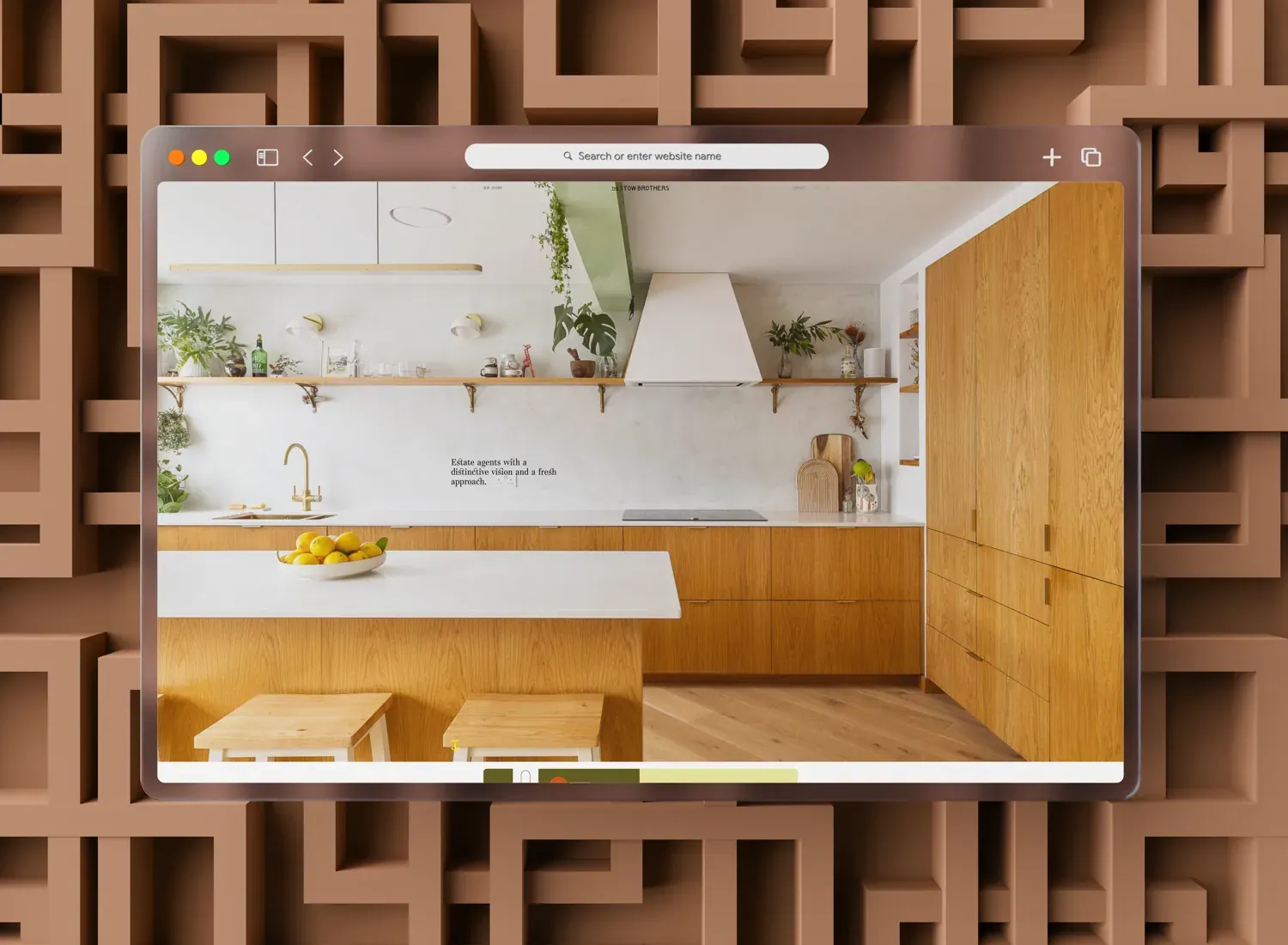
Stow Brothers
Workflow mapping and computer-use AI agent blueprint for a London estate agency operating on a closed-API CRM.
172 hours of admin work every month, on a CRM with no write API.
Stow Brothers is an independent North London estate agency running five offices off one shared CRM and one shared inbox. Five admin staff process every valuation, sale, exchange, and price change through that one Outlook thread. Vebra Alto is the system of record, and a direct read of its public API confirms what the team suspected: there are no programmatic endpoints for the actions an admin actually does. No letter generation, no outbound email, no attachment handling, no sales progression updates.
Two earlier AI experiments (a WhatsApp applicant registration tool and an AI-assisted booking flow) had gone live and been switched off. The team was wary of repeating the pattern. The Director would not commit to a build off the back of a pitch deck. The brief was evidence-grounded scoping: time measured against what the team actually does on screen, technology tested against the live CRM, and a recommendation that would survive a working week of stress-testing.
- Nothing leaves the office without a named person on the thread.
- The shared inbox stays the system of record and the operating surface.
- Every irreversible action is gated behind a human approval.
- No new tool for the admin team to learn; approvals route through the inbox they already live in.
- The compliance step in Memorandum of Sale is a hard stop for a manager.
A supervised AI agent that drives the CRM the way a human does, gated by an emailed approval.
With no API to write against, only two options remain. Persuade the vendor to ship endpoints, which is not a project plan a Director can stand behind. Or treat the CRM screens as the integration surface and drive them the way the admin team does. We took the second option, with one rule the team had to be able to trust: the agent refuses to write anything until a named admin replies Approved to a draft email.
We call the pattern Approval-by-Reply. The shared admin inbox is already the operating surface for this team. Routing approval through that inbox means the team does not learn a new tool, the agent inherits the inbox's existing access controls, and every approval is stored as a threaded email with a sender, a timestamp, and a body. A chat-app bot would split the audit trail. A confirmation pop-up would assume someone happens to be sitting at the right screen at the right moment. Neither survives a busy Tuesday in a lettings team.
The agent runs in two modes. A fast deterministic mode replays known steps inside the CRM. A slower model-driven mode takes over only when the screen has changed or a step has failed, then writes a new fast script for next time. Running the agent in this hybrid way is how the model costs stay sensible and how the system gets faster the longer it runs.
- Computer-use AI agent driving Vebra Alto screens, swappable for direct API calls if Vebra ever ships them.
- Cloud browser provider, replaceable; model provider, replaceable; both treated as settings.
- Approval-by-Reply gate: agent halts at draft, only writes back to the CRM after an inbound email confirms.
- Pre-action audit reads: the property's CRM timeline checked before any irreversible step.
- Microsoft 365 identity with mailbox permissions scoped to a tightly bounded named set, outbound email locked to the Stow Brothers domain.
- Hard stop on AML and Proof of Ownership: agent never proceeds past the compliance check without a manager-level human action.
Approval-by-Reply, drawn end to end.
The agent reads from the CRM, drafts the action, emails it to the admin inbox, then halts at the approval gate. It only writes back to the CRM once an inbound reply lands. If a reply does not come, the action does not happen.
A decision-grade package the Director can defend and a builder can quote.
For the admin team
The dull, repetitive parts of every sale, valuation, and price change get drafted automatically. The team replies Approved instead of typing the letter. The inbox stays the system of record.
For the Director
A Board-defensible AI roadmap with a chosen pilot, a chosen architecture, and prerequisites the agency owns. Sized to prove the pattern on a low-risk workflow first, then widen out.
For an engineering build team
A brief that can be quoted and built against without revisiting the discovery. Cloud browser and model providers interchangeable. On-screen automation swappable for API calls if the CRM ever ships them.
For the wider business
Reclaimable hours measured rather than promised. The same agent extends to Brochures once Letters-First proves the pattern; the approval gate is the load-bearing part.
Five admin workflows. One pentagon, sized by measured hours.
Two weeks of interviews landed on five workflows that account for the team's measured admin time. The pentagon on the left is the summary. The narrative on the right is where the pilot decisions came from.
Brochures
Brochures are the time sink. Images, floorplans and copy come out of the CRM, the layout gets composed, the vendor amends it, the file goes back out. Subjective visual judgement runs through every step, so this workflow sits outside the first pilot.
Memorandum of Sale
Sales agreed triggers a chain of letters to buyers, sellers and both solicitors. The templates are deterministic. Pulling party details out of the CRM is mechanical. The work is dull, repetitive and high-volume, which is the exact shape automation handles well.
Valuations
Confirming a booking, sending the pre-visit pack and writing the follow-up letter is a tight three-step loop sitting behind a calendar event. End-to-end automation under a single approval reply is realistic in the pilot.
Exchanges
Exchange triggers a final round of letters and a status update inside the CRM. The letters are deterministic. The CRM update is the kind of irreversible action the approval step was built to gate.
Price reductions
Lowest-volume workflow but highest signal-to-noise. A fixed letter, a small set of recipients, one CRM field to change. The pilot uses it as the canary: the first workflow turned on, and the first to prove the approval step in live use.
Letters-First over Brochures-First, with Reductions as the canary.
Letters-First
Valuations and Price Reductions end to end, plus the deterministic letters inside Memorandum of Sale and Exchanges. The compliance check and the broken signs-portal step held back. Low complexity, every step behind an inbound email reply, runs first.
Brochures-First
Targets the 99-hour workflow but carries subjective visual judgement (which six photos, what the hero shot is, vendor amendment cycles) that needs a heavier supervision setup. Sequenced after Letters-First proves the underlying agent on lower-risk surfaces.
How we delivered it.
Stack
Capabilities
Compliance
From scoping to live.
- Studio Manager interviewScreen-by-screen walkthrough of every system that touches a property file: CRM, compliance portal, shared inbox, file storage, the signs portal. Week 1
- Workflow measurementVolumes per month and minutes per task measured across all five admin workflows, iterated three times with the Studio Manager until the numbers settled. Week 1
- CRM API auditDirect read of the Vebra Alto public API confirmed no write endpoints for the actions an admin actually does. Locks the on-screen-agent design decision. Week 2
- Live AI testsTwo contained tests on the live CRM: a computer-use AI model logged in and read a property record without breaking; an image classifier picked a defensible best-six against the agency's own visual rule. Week 2
- Strategy and pilot specStrategy report and pilot specification, both reviewed with the Director and Studio Manager. Letters-First scope recommended; Brochures-First sequenced after. Week 2
Bring your team's next AI project to a 30-minute call.
No deck. We listen, sketch a delivery shape, and tell you honestly whether AI is the right tool for the problem.